Maracuja Oil for Face: What’s the Hype — and How Do You Choose?
If you’ve been searching for maracuja oil for face, you’ve probably seen the debates.
Argan vs maracuja.
Jojoba vs maracuja.
Is it good for acne?
Does it replace Vitamin C?
Is it just overpriced oil in a pretty bottle?
There’s a lot of noise — and a lot of hype — making it hard to know what’s actually best for your skin.
Argan oil is known for deep nourishment, while jojoba is prized for balancing oil production — both are excellent in the right context.
We chose maracuja oil (passionfruit seed oil) intentionally for this formula. It has quietly become one of the most talked-about lightweight facial oils because it absorbs quickly and supports the skin barrier without heaviness.
But here’s what most discussions miss:
Not all maracuja oils are formulated the same way.
Many versions on the market are simply pure passionfruit oil — which can be lovely — but they’re not antioxidant serums. They don’t replace Vitamin C. And they don’t offer meaningful environmental protection on their own.
If you’re looking for something that hydrates and visibly revives tired skin — especially during winter or high-stress seasons — formulation matters.
Let’s break down what maracuja oil actually does… and what makes a truly elevated formula different
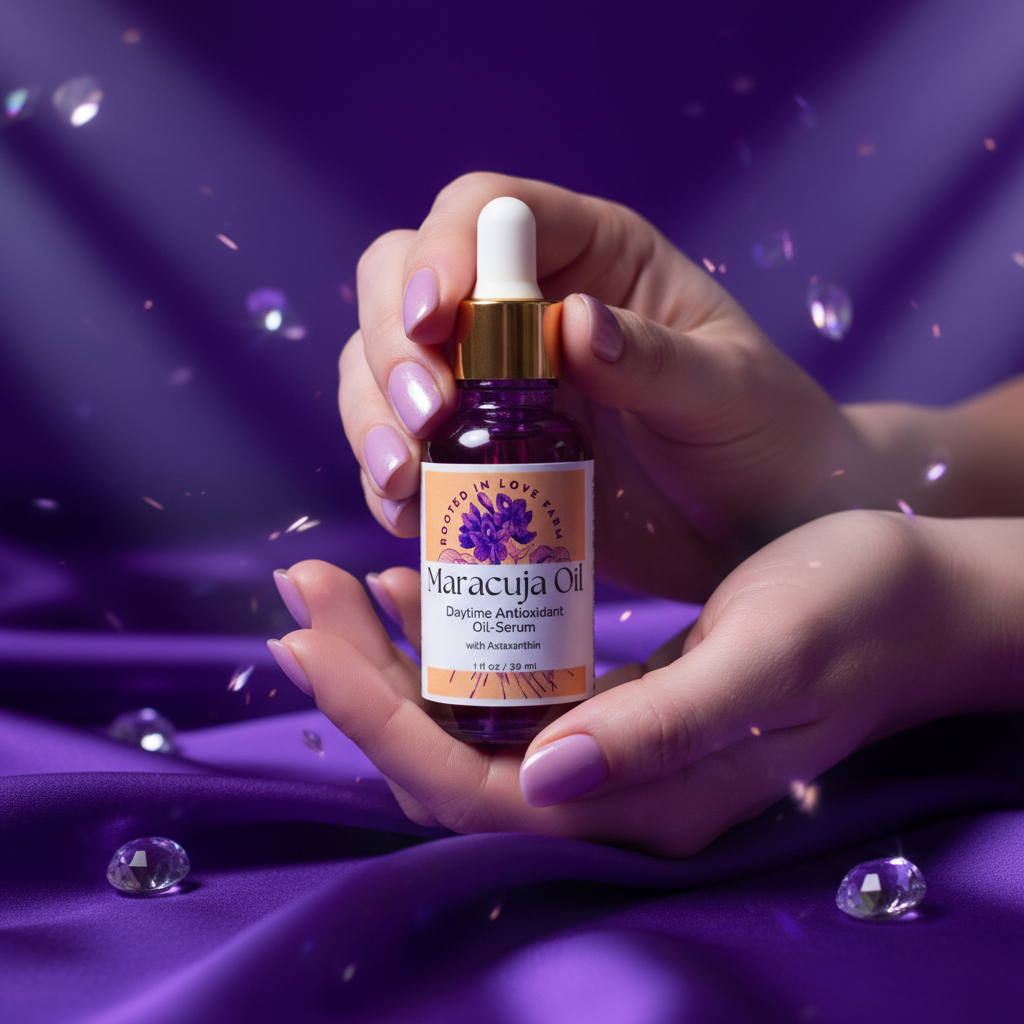
The Difference Between Basic Maracuja Oil & an Antioxidant Formula
Cold-pressed maracuja oil delivers lightweight hydration. It’s naturally rich in essential fatty acids — particularly linoleic acid — which helps support the skin barrier and maintain balanced moisture levels.
Unlike heavier oils, maracuja absorbs quickly and leaves a breathable, non-greasy finish.
But skin today isn’t just battling dryness — it’s battling oxidative stress from pollution, UV exposure, inflammation, and daily environmental triggers.
That’s where antioxidant support becomes essential.
Traditional Vitamin C oils can oxidize quickly or irritate sensitive skin. If you’ve ever purchased a Vitamin C serum that turned brown, you’ve seen this instability firsthand.
Instead of relying solely on unstable forms of Vitamin C, we formulated Maracuja Oil - Daytime Radiance with oil-soluble antioxidants like CoQ10 and astaxanthin* — delivering stable, daytime-friendly protection with barrier support for a Vitamin C cocktail.
👉*Learn more about why astaxanthin is one of the most powerful antioxidants in skincare.
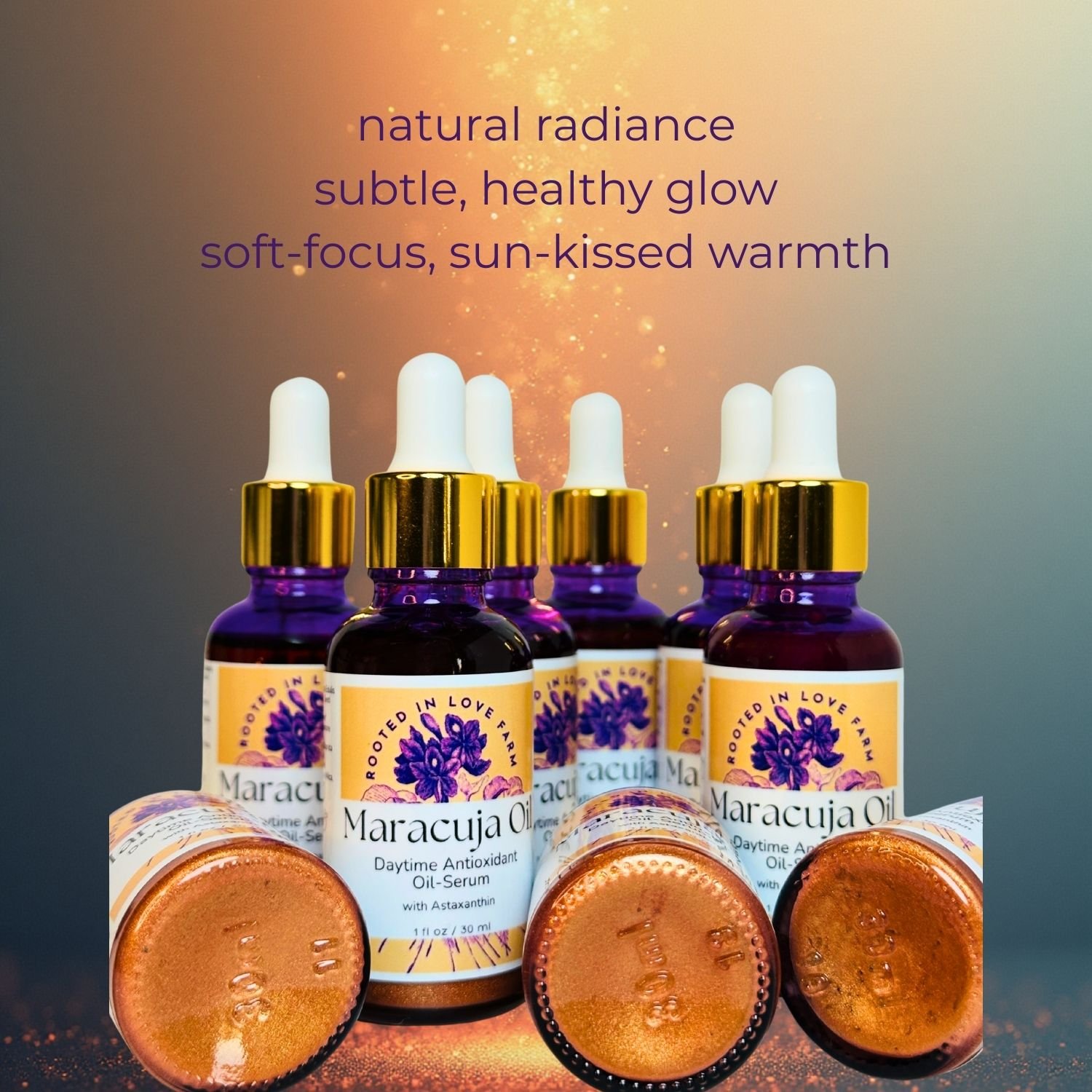
A Glow You Can Actually See
One reason maracuja oil became so popular is that people want results they can see.
Our formula includes a subtle touch of ultra-fine cosmetic-grade mica — not glitter, not sparkle — but a refined, light-reflecting finish that enhances skin’s natural luminosity.
It’s the difference between:
“I think it’s working.”
and
“You look rested — what are you using?”
Because sometimes glow should be visible.
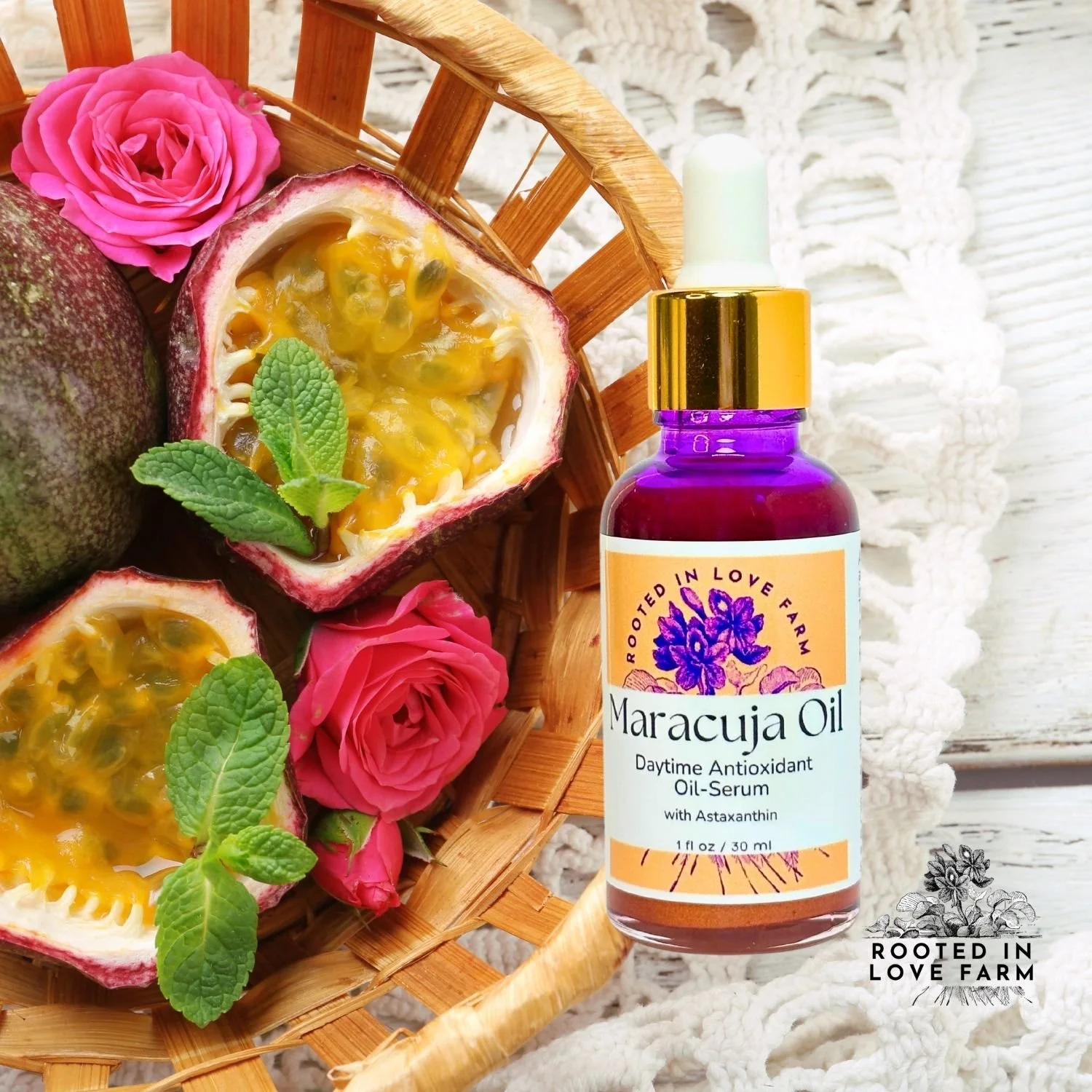
Why We Elevated Ours
At Rooted in Love Farm, we didn’t want to create “just another maracuja oil.” We built Maracuja Oil – Daytime Radiance around three intentional pillars:
Organic Cold-Pressed Maracuja Oil
For lightweight hydration and barrier support.CoQ10
To help defend against environmental stress and support skin resilience.Astaxanthin
One of the most potent natural antioxidants known — significantly stronger than vitamin C alone — helping improve visible brightness and vitality.
We transformed maracuja oil from simple hydration into daily antioxidant support.
The Bottom Line
Maracuja oil for face can absolutely improve hydration and texture. But when paired with thoughtful antioxidant support, it becomes more than moisture — it becomes protection.
If you're looking for lightweight daytime radiance without heaviness, congestion, or instability, a well-formulated maracuja oil can be one of the most versatile additions to your routine.
See the Elevated Version for yourself. If you’d like to experience antioxidant-powered maracuja oil designed specifically for daytime wear:
Frequently Asked Questions
-
Argan oil is richer and often better suited for very dry skin. Jojoba closely mimics the skin’s natural sebum and can be helpful for oil-balancing. Maracuja oil is lighter in texture and higher in linoleic acid, making it especially appealing for combination, dull, or congestion-prone skin.
When combined with oil-soluble antioxidants like CoQ10 and astaxanthin, maracuja oil can offer both hydration and environmental protection — something most single-ingredient oils do not provide.
-
Maracuja oil is lightweight and generally considered non-comedogenic for most skin types. Because it absorbs quickly and is rich in linoleic acid, it may help support barrier balance without leaving a heavy residue. As with any facial oil, moderation is key — start with 1–2 drops.
-
They serve different purposes. Traditional Vitamin C can be unstable (lose its effectiveness) and irritating for some skin types. Our formula of Maracuja Oil is a powerful antioxidant that includes superstar ingredients like CoQ10 and astaxanthin. It offers stable, oil-soluble protection while also supporting the skin barrier.